
The Emergency First Response (EFR) programme is a modern first aid training programme designed to teach essential first aid techniques for people whose lives are at risk or who require immediate care. Its purpose is to bridge the critical gap between the onset of an emergency and the arrival of professional medical assistance.
The Emergency First Response programme is suitable for any responsible individual who wishes to gain the knowledge and skills required to respond effectively when a person’s life is threatened, during the time before professional emergency services become available.
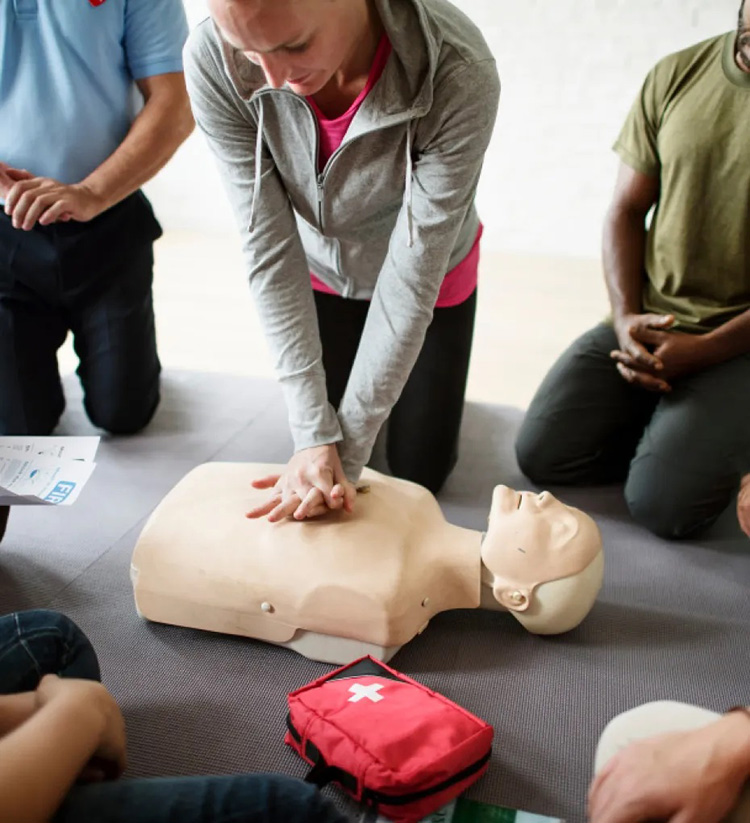
Participants in the programme will experience a variety of specialised learning tools, including simplified first aid procedures presented in easy-to-follow steps, illustrated manuals, instructional videos, and practical training using adult, child, and infant training manikins, as well as a training AED. This innovative training approach aims to develop confident responders who are prepared to provide effective first aid whenever needed.
Anyone, regardless of age, can participate in the Emergency First Response programme. There is no minimum age requirement; however, it is at the instructor’s discretion to accept participants under 18 years old if they are considered capable of understanding and successfully completing the training.
No previous knowledge or experience in first aid is required to participate in this programme. The Emergency First Response course provides all the essential knowledge and skills needed. The EFR Primary Care and EFR Secondary Care programmes can be completed together or independently. To participate in the EFR Secondary Care programme, completion of EFR Primary Care is required beforehand.
Primary Care covers life-threatening emergencies and includes rescue breathing, cardiopulmonary resuscitation (CPR), the use of an Automated External Defibrillator (AED), as well as the management of severe bleeding, shock, and serious spinal injuries.
Secondary Care focuses on the care of injured or ill individuals and includes wound care and dressing, splinting techniques, patient assessment and care, as well as the organisation and preparation of a first aid kit.